As Our Children Learn to Drive
As our children are growing up, is there anything that can make a parent more nervous than when our children are learning to drive? It was certainly not something I looked forward to as each of mine got closer to that age. (Though I do have to admit that I liked the idea of no longer being the family’s only chauffeur. )
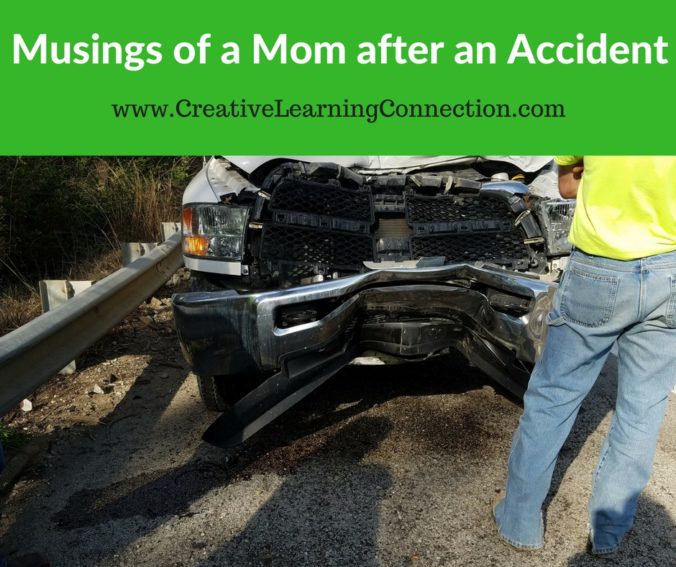
And there’s nothing like being involved in a car accident to make a mom think about such things again, even years after they’ve all learned to drive. More on last week’s accident in a moment; for now, suffice it to say, that miraculously, we all walked away from it without injuries.
Non-Driver to New Driver to Experienced Driver
After watching each of my children move from being a non-driver, to a new driver, to an experienced driver, I now believe that teaching them the mechanics of driving was the easy part. But, I pray, especially after this most recent accident, that they’ve all become not just adequate drivers, but also safe drivers.
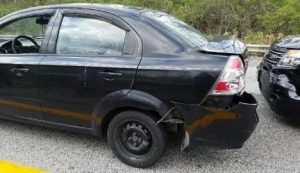
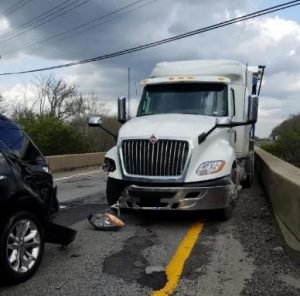
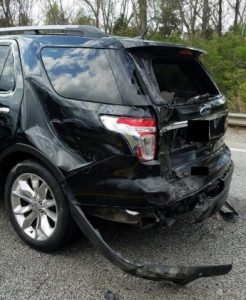
I’m convinced that the longer we drive, the less we tend to think about how much more goes into being safe on the road than just knowing how to drive. Last Wednesday evening we got caught in rush hour traffic as we returned to Louisville from a day trip to the aquarium near Cincinnati. Too many other cars were trying to exit the interstate at the same exit we were supposed to be getting off at, and the traffic in our lane slowed down until it had come to a complete halt. We stopped; the small vehicle behind us stopped; the SUV behind it stopped; the 18-wheeler did not; nor did the pickup truck behind it. Within minutes the vehicular dominoes had fallen, and all five vehicles, and the twelve people within them, were no longer heading anywhere.
An Injury-Free Accident
Amazingly, there was no loss of life. In fact, all twelve of us climbed out of the various vehicles without a scratch. But there were other consequences. Our vehicle was totaled. The small car that hit us was definitely totaled. The SUV behind him sustained quite a bit of damage in both the front and the back, but was a relatively new vehicle, so I don’t know what will happen with it. And then there was the damage to the 18-wheeler and the pickup truck; thousands of dollars more damage to those two, I’m sure.
One way or another I suspect that the insurance companies will eventually take care of some sort of payments for all of that. But will those of us with the two smaller cars be able to replace our vehicles for the money that we receive if they are considered totaled? It is highly unlikely. On moment we had good, functioning vehicles, and the next moment we did not. How do the insurance companies make that situation right? By writing us checks for a small portion of their true value?
A Ruined Career?
And then there was the driver of the 18-wheeler. He made a mistake that has probably ruined his career. When he barreled into the back of the SUV, setting off the five-car wreck, he was holding a cell phone. (Something I’ve since been told is illegal for any driver of an 18-wheeler.) Whether he was texting, or just in some other way distracted by his phone, it resulted in his failure to realize what the traffic was doing, and he endangered his own life and at least eleven others. (And apparently, in Kentucky, where this happened, the fine if they decide he was texting and driving will be astronomical.)
Vs. A Ruined Evening
In just moments the evening plans of a dozen people turned upside down. Though, again, we were all very thankful that it was plans and not lives that were ruined. We were headed back to a friend’s house, looking forward to an early dinner and a quiet evening (doing things like writing a very different blog post!) The young man in the car behind us was heading home from work, and was a mere five minutes from his house when his car was struck. The SUV contained a family of four, on their way to basketball practice for the two teenage girls. And so it went on down the road. None of us thought we would be spending more than two hours by the side of the road that evening, giving statements to the police, and then eventually waiting for our mangled vehicles to be towed away.
The Critical Driving Lessons
And as I go over the accident in my mind, I wonder once again, as I have since my children started learning to drive more than twenty-five years ago, have they learned the driving lessons they needed to learn? And what would I consider the most important ones for them to remember?
Here is a short list of ones that came to mind as a result of this accident:
- Will they pay attention to the cars around them? (The driver of the 18-wheeler was not; but a sixth driver, who had originally been between the 18-wheeler and the SUV, actually realized what was happening, and moved out of the way just in time to avoid being part of the accident.)
- Will they drive at a safe speed? (Which, as we saw that evening, isn’t always the posted speed limit.)
- Will they get off the road if they are tired? (Which I’ve heard can be as dangerous as driving drunk.)
- And as they get older – will they stay off the road if they’ve been drinking? (Illegal, as well as unsafe.)
- With as many older cars as we’ve owned – will their cars be safe and not have problems that cause an accident?
- Will they wear their seatbelts? (I’m fairly sure we would not have all walked away from this accident without injuries if hadn’t been for our seatbelts.)
- Will they remember not to tailgate? (The only reason we didn’t hit a car in front of us when we were hit from behind was because my daughter had not been following too closely.)
- And, now more than ever, will they not drive distracted? (The rest of us may never know what caused that driver to be distracted, but he was clearly not paying attention, or the wreck would never have happened.)
Lessons Learned In An Accident
After an accident like this, I just want to reach out and hug each and every one of my children. And then to follow that up with doing my motherly thing. “Please be sure not to tailgate. And to remember that nothing you want to do with that phone, is worth the damage that can occur if you take your eyes off the road at just the wrong time. And, ultimately, it doesn’t matter if you are the best driver on the road, you are only as safe as the drivers around you – so pay attention to them!”
Be safe!
Cathy









 As yesterday was coming to a close I realized I had missed my deadline – the deadline for this week’s blog post.
 I also won’t apologize for the context of this post, a topic that I have addressed several times in the more or recent past, and that some of you may be tired of hearing. But, if you have heard
  This was my twenty-first year to be the advisor for the
  These kids brought me to tears (not a first for a Mock Trial weekend, sadly). But this was the first time that those were all tears of joy. I cannot think of one time in the entire weekend that I was angry with any of them, or even slightly annoyed for that matter. In spite of room issues the first night, late nights all weekend, and last minute changes to their trial plans when both teams had their opening lawyers start a day not feeling well, they hung in there, worked together, and continued to do their best. One team even had to do more trials than they felt like they had agreed to (four is the promised number of trials, with some teams getting a fifth, and generally only the top two teams getting in a sixth trial). But this weekend they had the two expected trials on Saturday, followed by four in a row on Sunday (most likely a record!) They were tired, some of them were more than a little overwhelmed by the extra efforts required by the two extra trials, but they all gave it their best, complained very little, and kept going.
 Most of these students will never become lawyers. In fact, it is likely that many of them will never step into a court room again after these competitions. But they still gain so much from participating in this program. I’ve watched so many of them come of out their shells, honing their abilities to argue their points, and learning to think on their feet. And throughout it all I watch so many of them develop friendships that will move into their post-school years with them. They often comfort others who have become overwhelmed or stressed, moving beyond just thinking about themselves.
 As a teacher I have been fairly confident over the years that I have made at least a small difference in many of my student’s lives. Yesterday, twelve of those students made me cry tears of joy by sharing some of those specifics with me. I am confident that memory will stay with me for a long time to come.

 In Alabama it is actually called Youth Judicial, but we’ve always called it Mock Trial and that’s what it’s generally called elsewhere, so we’ll stick to that. Mock Trial is a state competition for high school students (generally from public and private schools, with a few homeschool teams sometimes sprinkled in for good measure). In most states Mock Trial is sponsored by the state bar association, but in Alabama it’s sponsored by the YMCA. In states with bigger programs, there are competitions where teams must qualify to go to the state event, but in Alabama we just have the one, large state-wide competition that happens each November in Montgomery.
 Each trial is conducted like a smaller, more controlled, version of a real life trial. The courtroom is set up like in real life – complete with a judge and a bailiff (in Alabama those are also students), a jury, a Prosecution team and a Defense team.
 Then it’s time for Defense to tell their side of the story – calling up their three witnesses to each be directed and crossed. During these directs and crosses lawyers are allowed to make objections if they so desire. (Hearsay and Relevance being two that we hear often down there.) Judges rule on each of the objections as they are made. (Often rather poorly in this coach’s perspective, but alas, they aren’t asking for my opinion on the matter!)
 That’s the nuts and bolts of how the trials run. After trials I like to go over my notes with my students, generally encouraging them, sometimes reminding them to “Speak up!” and occasionally pointing out small things they can work on for the next time. We will have practiced many times before this, and this isn’t the time to make major changes to our process. They have it by then or they don’t. But sometimes there is a question about an unexpected objection, or a procedural difference that surprised us. I’m not a lawyer, so occasionally these questions stump me too, but generally my twenty plus years of Mock Trial experience will give me the information they are seeking.
 We’ve met countless teams in Montgomery that have held tryouts for their teams and are going down with every intention of trying for the first place award. Many of them are serious to the point of obnoxiousness. We’ve never had anything against winning. (I lose track, but I think we’ve taken home nine first place awards in the twenty years we’ve done this, as well as numerous second and third places.) But I don’t go down there expecting or desiring that. I would rather take students who want to learn something, while having a reasonably good time at it. I’ve never gotten angry with a student who forgot the facts in their statement or who missed an objection. As long as my students are doing their best, and not cheating (something we see too much of in Montgomery), I am happy with them.
 Witnesses have to spend much time on their own reading and getting very comfortable with their own witness statements. They are responsible for knowing all the little and not so little facts that their statement presents. (And a few of the witnesses, in this case our doctors, have to be familiar with one or more of the relevant exhibits.) As much as is possible, we actually have witnesses write out their own Direct questions and answers. That makes it easier on them, since witnesses must memorize their answers to the Direct questions (or at least the related facts, so they can easily answer those questions) and know their statements well enough to answer most any Cross questions that might get thrown at them. (Witnesses have no notes to help them when they take their seat in the Witness Stand.)
 Lawyers on the other hand, can use notes if they want to. (It may drop their score by a point, but that’s not a point worth stressing about.) Before the competition, each lawyer has to write a series of questions for whichever witness they are going to be crossing. They also need to have at least a passing knowledge of the most common objections, particularly the ones they are most likely to hear on their questions or that they will most likely want to make. (Something we try to work on each practice to make it easier. But again, not something I stress about.) Additionally, one lawyer from each team has to write the Opening Statement and another lawyer has to write the Closing Argument. Again, lawyers have the privilege of being able to memorize their questions and speeches, or to use notes, whichever they prefer.
 Sadly, this is the difficult part of the equation. Competing in Alabama’s Mock Trial Competition is not cheap! The YMCA charges each student $275 – and that only covers some of our costs (two of our nights in the hotel, a couple of our meals, and a t-shirt they may or may not want). On top of that, our additional expenses have risen to $125 per student – by the time we pay for our additional hotel costs, the extra meals, and our transportation to and from Montgomery. (And this is with the coaches and any other parents that want to attend paying their own expenses.)
 Obviously, each family has to decide that for themselves, but more than twenty years ago I made the decision that yes, this was something we would invest the time and money into. (Fortunately it didn’t cost quite this much back then. Costs seem to rise annually.) And believe me, we have – I’ve taken as many as three of my own children to this at one time – having to pay for each of them and myself as the coach. And I’ve paid for the privilege of taking other people’s children for the last several years, since my last child graduated from the program. So, yes, I know the costs and have been willing to pay them.

 My oldest kids were on one of the first ever homeschool teams in the state of Texas, and four years later one of my sons started the first ever homeschool team in the state of Alabama. And we continued the Mock Trial teams through our homeschool group long after that son graduated from high school, college, and law school. If you count the early years when I was more of an advisor than a coach (my son served as the real coach for the first few years in Alabama), this will be my 21st year coaching high school Mock Trial.
 I’m very happy that all of my children (as well as three of my nieces and dozens of other homeschooled students) have been able to partake of this amazing activity. For those who want to become lawyers, it is practically a must. But even for the more numerous students who have no interest in going into law, it is an amazing experience! It helps students work on their public speaking skills as well as their logic and quick thinking. And it introduces them to how our judicial system should work.
 It’s not an easy extracurricular activity – it takes up several hours a week for about six weeks each fall. (At least in Alabama. In other states, the Mock Trial competition occurs later in the year.) We’ve gone up against teams that do tryouts for spots on their teams, but we’ve never felt the need to do that. In our twenty years of competing in Mock Trial in Alabama we only had try outs once – and that was when I had two students that both wanted to give the Opening Statement on their team. We had to settle that with a “write off.” But I’ve never had to turn down a high schooler who wanted to participate with us. (We’ve occasionally had to fill team spots with 7th or 8th graders, and I haven’t always had spots for younger siblings that have wanted to participate with us.)






 Today I will share several others. But first, I want to reiterate a couple of things from my
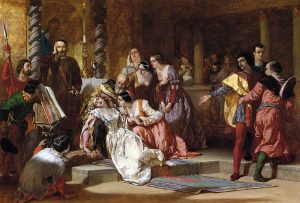

 For another one of our activities we were broken into small groups, each with a portion of a different scene. Each group had the same number of people as their scene had characters. As a group we had to choose five places from our scene that we could take “snapshots” of – where we could quickly “act” them out (more of a posed three-dimensional picture for each place.) The idea was to visually represent the highlights of our little scene.
 I don’t want to turn my Shakespeare classes into acting classes – plenty of others already offer those. I want to keep my emphasis on reading and enjoying Shakespeare. But I can see how these types of activities, sprinkled sporadically amongst our readings could add a new dimension to our Shakespeare understanding and enjoyment.